
October is National Safe Work Month, an opportunity for workplaces across Australia to consider how they are protecting the health and safety of their people.
This year’s theme, “Safe work is for life,” reminds us that workplace safety is about more than responding when something goes wrong. It is about creating safer ways of working and making sure people have the support, systems and tools they need throughout their working day.
For organisations with lone, mobile and higher-risk workers, workplace safety technology can form an important part of that picture, helping people stay connected and providing a way to call for assistance when they need it.
At mCare Digital, this is something we think about every day.
Why workplace safety matters
Every worker should be able to feel safe while doing their job and know there is a way to get help if they need it. But for many Australians, the workplace isn’t necessarily one fixed location.
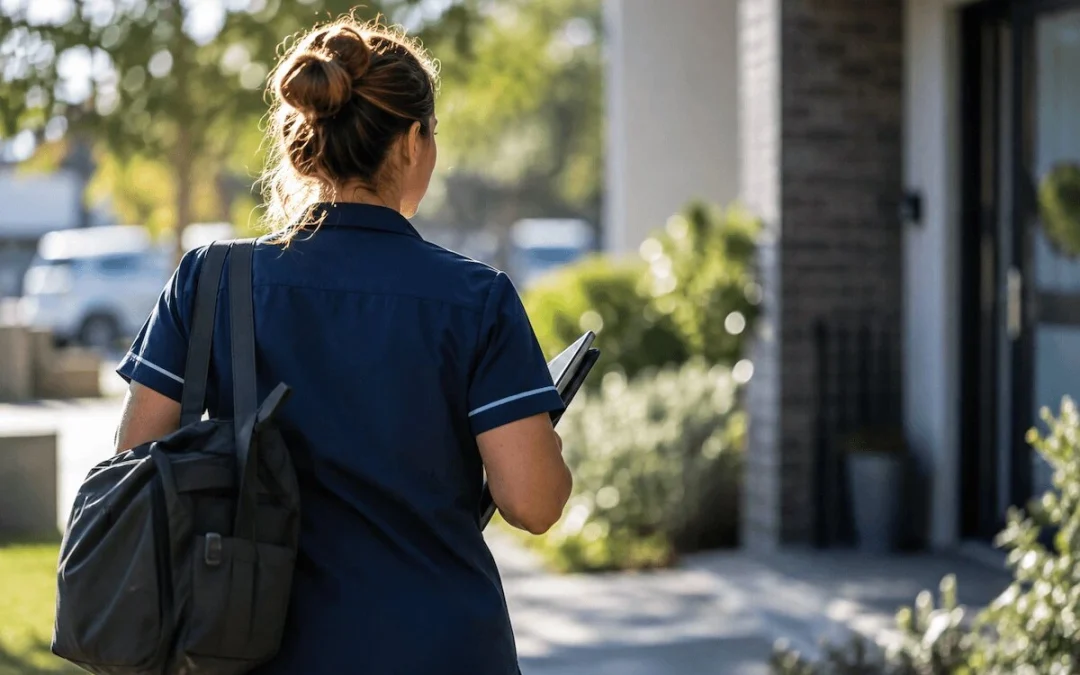
Community and support workers visit people in their homes. Healthcare and outreach teams move between appointments. Field workers may spend much of their day alone. Others work after hours, in isolated environments or across large facilities where colleagues aren’t always nearby.
These working environments create different safety considerations and require organisations to think about how their safety systems work beyond the traditional workplace.
Workplace safety doesn’t stop at the workplace
For organisations with lone, mobile or higher-risk workers, one of the most important questions to ask is:
If something happens, how does our worker get help?
An SOS or duress function can give an employee a direct way to raise an alert when they feel unsafe or need assistance.
Depending on the role and working environment, this might be through a wearable duress device, mobile safety app or discreet Bluetooth button, allowing workers to access assistance without relying on colleagues being nearby.
Having an accessible way to raise an alert can be particularly important for people working alone, travelling between locations or entering unpredictable environments.
Knowing where help is needed
When an employee is away from a fixed workplace, knowing they need assistance may not be enough. You also need to know where that assistance is needed.
For workers out in the community, GPS location technology can help identify their location when an alert is raised, providing valuable information to those responding.
Location can become more complex inside large buildings and facilities, where GPS may not provide enough detail.
In these environments, indoor location technology can provide more useful information about where an employee is within a workplace or facility.
Supporting lone workers before an emergency happens
For lone and isolated workers, maintaining a connection with their team throughout the working day can form another part of an organisation’s safety approach.
Check-in processes can allow workers to confirm they are safe at agreed times or stages of their shift. If an expected check-in doesn’t happen, the organisation can have a process in place to follow up.
For teams working independently across multiple locations, this provides another way to stay connected without requiring constant contact.
How workplace safety technology supports a response
What happens after someone presses SOS is just as important as how they raise the alert.
Who receives it? What information do they receive? Who is responsible for responding? And what happens if the first person isn’t available?
Workplace safety technology needs to sit within a clear response and escalation process.
Depending on an organisation’s requirements, this can include 24/7 monitoring and customised escalation pathways, helping alerts reach the appropriate people when assistance is required.
mCare Digital’s ConnectiveCare® platform can also bring together connected devices, alerts and location information, helping organisations manage staff safety across different people, teams and working environments.
The aim is to create a connected pathway between a worker requesting assistance and the people who can respond.
Building staff safety around real-world risk
There is no single staff safety approach that suits every organisation.
A disability support worker visiting clients in their homes may have very different needs from someone working alone in a warehouse. A community worker travelling between appointments faces different circumstances from an employee working across several levels of a large facility.
That’s why staff safety should begin with understanding the worker, their environment and the risks they may encounter.
For one team, the right approach might include wearable duress technology and GPS location. Another may need discreet SOS activation, indoor positioning, check-ins or 24/7 monitoring.
Technology should support the way people already work, rather than make their jobs more complicated.
Most importantly, when someone needs help, there should be a practical way to ask for it and a clear process for what happens next.
Make staff safety part of the conversation this National Safe Work Month
National Safe Work Month is a timely opportunity to look at your organisation’s safety systems through the eyes of the people who rely on them.
Ask your team:
How would you call for help if you were working alone?
Would we know where you were?
Who would receive your alert?
What would happen next?
Do our current safety systems reflect the way you actually work?
These conversations can help uncover gaps and identify where existing systems could be strengthened.
If your organisation is reviewing its approach this National Safe Work Month, mCare Digital can help you explore workplace safety technology suited to your people, workplace and risk profile.